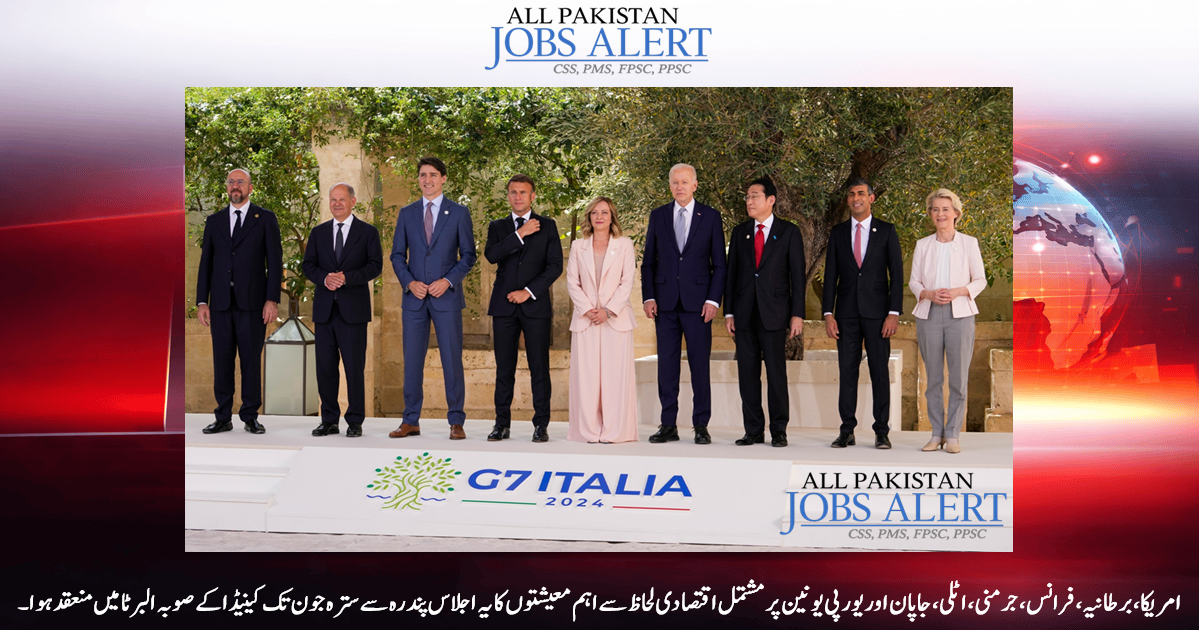
Kananaskis, Alberta: Canada held the 2025 Presidency of the Group of Seven (G7) and hosted the 51st G7 Leaders’ Summit in the mountain resort region of Kananaskis, Alberta, from June 15 to 17, 2025.
The high-level gathering brought together leaders of the world’s most advanced economies to address urgent global challenges, including economic resilience, geopolitical tensions, climate change, artificial intelligence, and global development cooperation.
The G7 consists of Canada, the United States, the United Kingdom, France, Germany, Italy, and Japan. Representatives of the European Union also participate in the summit.
Under Canada’s presidency, discussions focused on strengthening democratic institutions, stabilizing global supply chains, and coordinating responses to ongoing regional conflicts. Leaders reaffirmed their commitment to multilateral cooperation and rules-based international order.
1. Economic Stability and Growth
Leaders discussed strategies to combat inflation, improve supply chain resilience, and promote inclusive growth. Emphasis was placed on supporting developing economies facing debt vulnerabilities.
2. Global Security and Geopolitical Challenges
The summit addressed international security concerns, including ongoing conflicts and emerging threats. Leaders stressed unity in responding to instability and safeguarding global peace.
3. Climate Action and Clean Energy
Climate change remained central to the agenda. Members pledged to accelerate the transition toward clean energy, enhance climate financing, and support sustainable development initiatives worldwide.
4. Artificial Intelligence and Technology Governance
Recognizing the rapid rise of AI technologies, leaders discussed responsible innovation, cybersecurity cooperation, and the need for ethical frameworks to manage digital transformation.
Kananaskis, nestled in the Canadian Rockies, previously hosted a major global summit in 2002. Its return as a venue for the 2025 G7 summit highlighted Canada’s role as a key diplomatic actor on the global stage.
Security was heightened throughout the three-day event, with coordinated efforts to ensure smooth proceedings while allowing space for civil society engagement.
As the 2025 presidency concludes, Canada’s leadership at the summit is being viewed as an effort to reinforce unity among advanced economies during a period of global uncertainty. Observers note that the outcomes of the Kananaskis summit are likely to shape international cooperation on economic policy, climate strategy, and technological governance in the coming years.